
Great memory Marion. Those accounts say so much more than factual daily reports. They are detailed and personal and usually have no military value but you know they are important to the veterans that remembered them and passed them along. I suppose that a good cook was worth a lot in the war, if Lee got a reputation for being a good cook under the conditions he cooked in, then he must have been really good. I am sure Patton didn't send him down to the front to boil cans. Personal accounts are my favorite, thanks for this one.
Yes, that last memory was none too pleasant. It has stayed with my Dad from that day to this, about 75 years.
Glen Blasingim

Yes anyone can call up dates for battles and recite numbers, but I too feel that these stories are one of a kind and make the war a more personal experience. These are the ones that grab the general public and make them want to know more.
Marion J Chard
Proud Daughter of Walter 'Monday' Poniedzialek
540th Combat Engineer - H&S Company
Battlefield Commisions
The 160th Engineer Combat Battalion had three men receive field commisions in Europe. It was rare and quite an honor but these men earned that distinction. They were, John E. Stout, Jack Dotta and Ernest W. Lybarger. These are a few pictures from Dad's battalion book that I always found interesting.
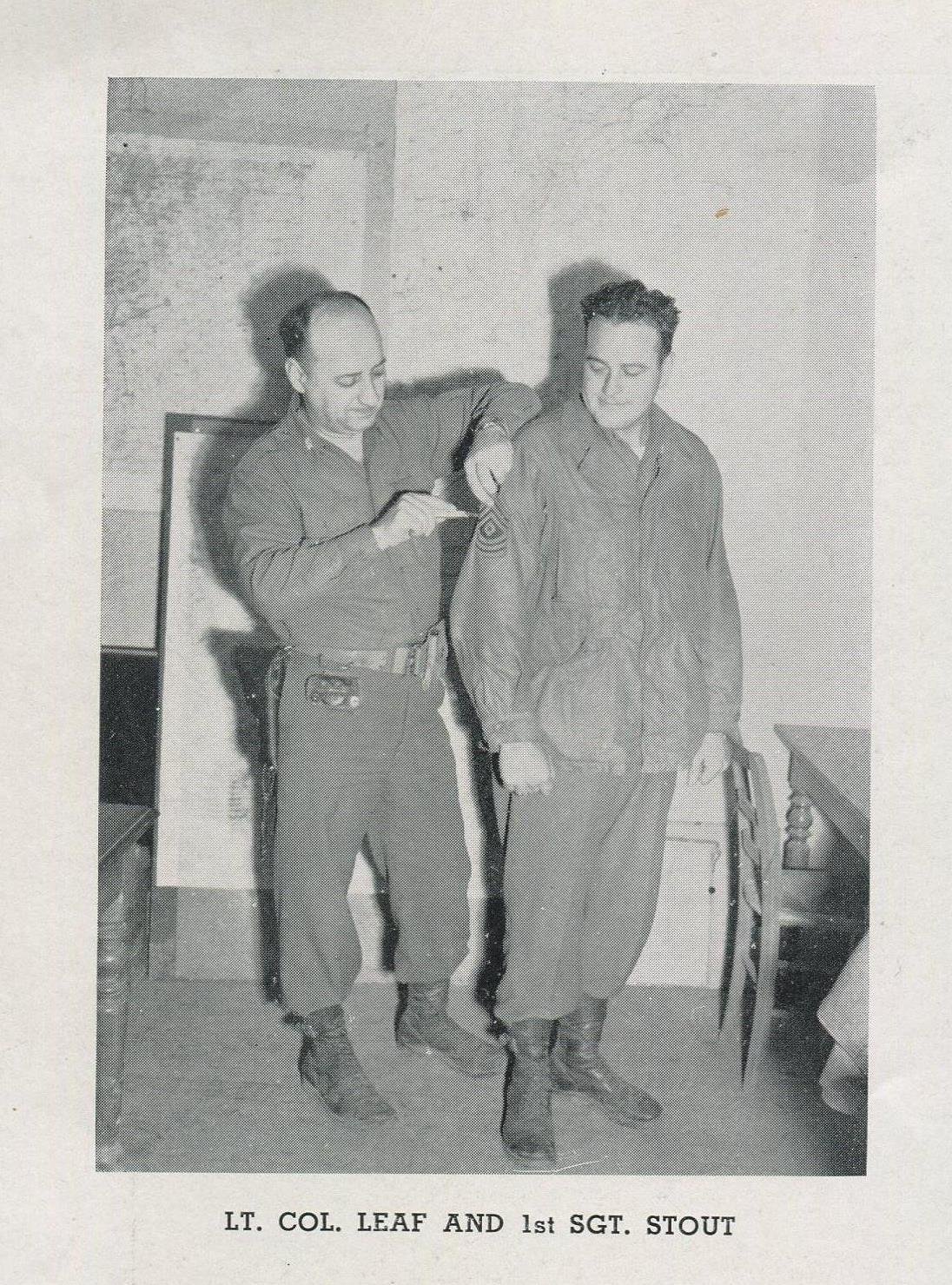

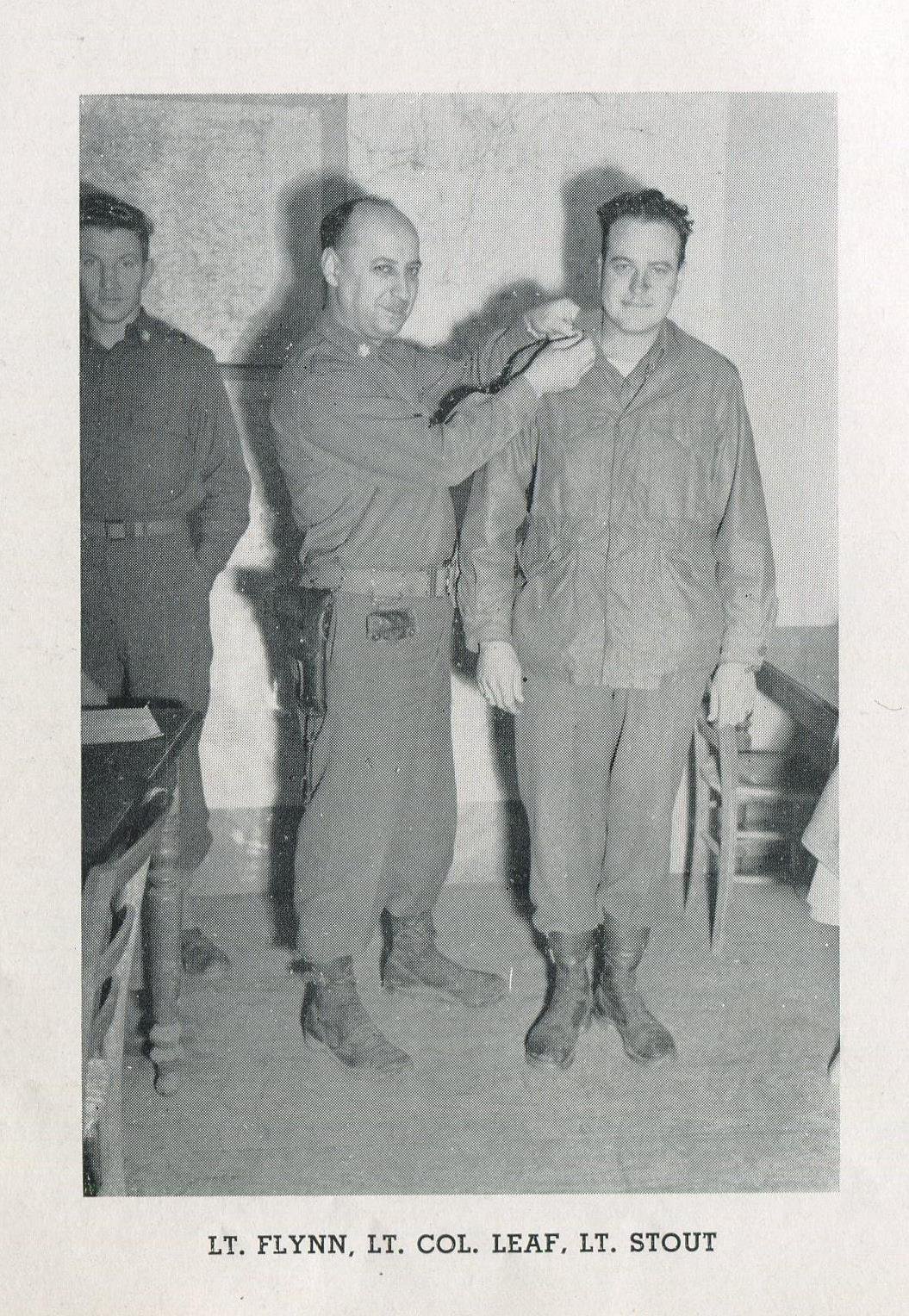
John E. Stout, 1st. Lt., Burlingame, Kansas Commisioned from B Company First Sgt. on October 1944 at Rembercourt, France


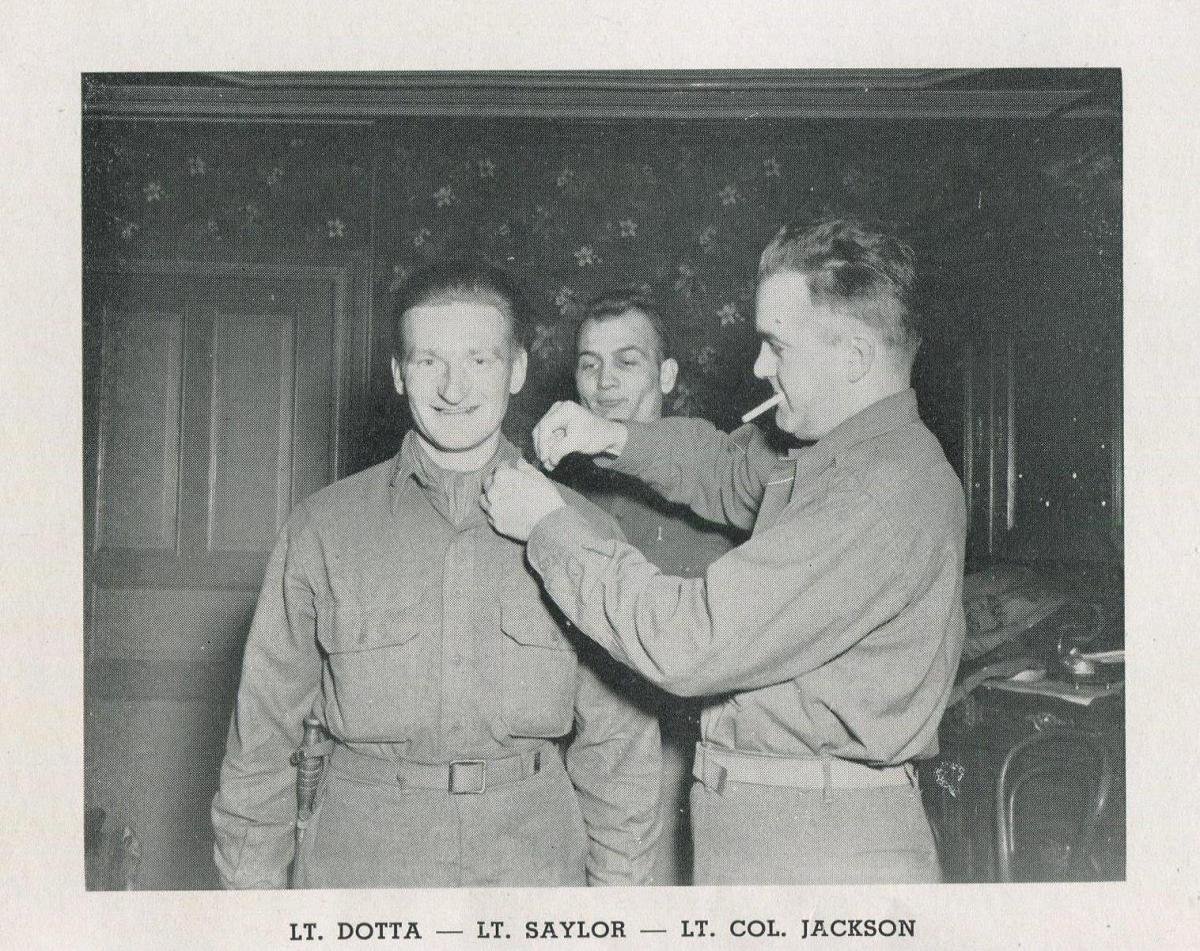
Jack Dotta, 2nd Lt., St. Louis, Missouri Commisioned from C Company SSgt on February 1945 at Senningen, Luxembourg
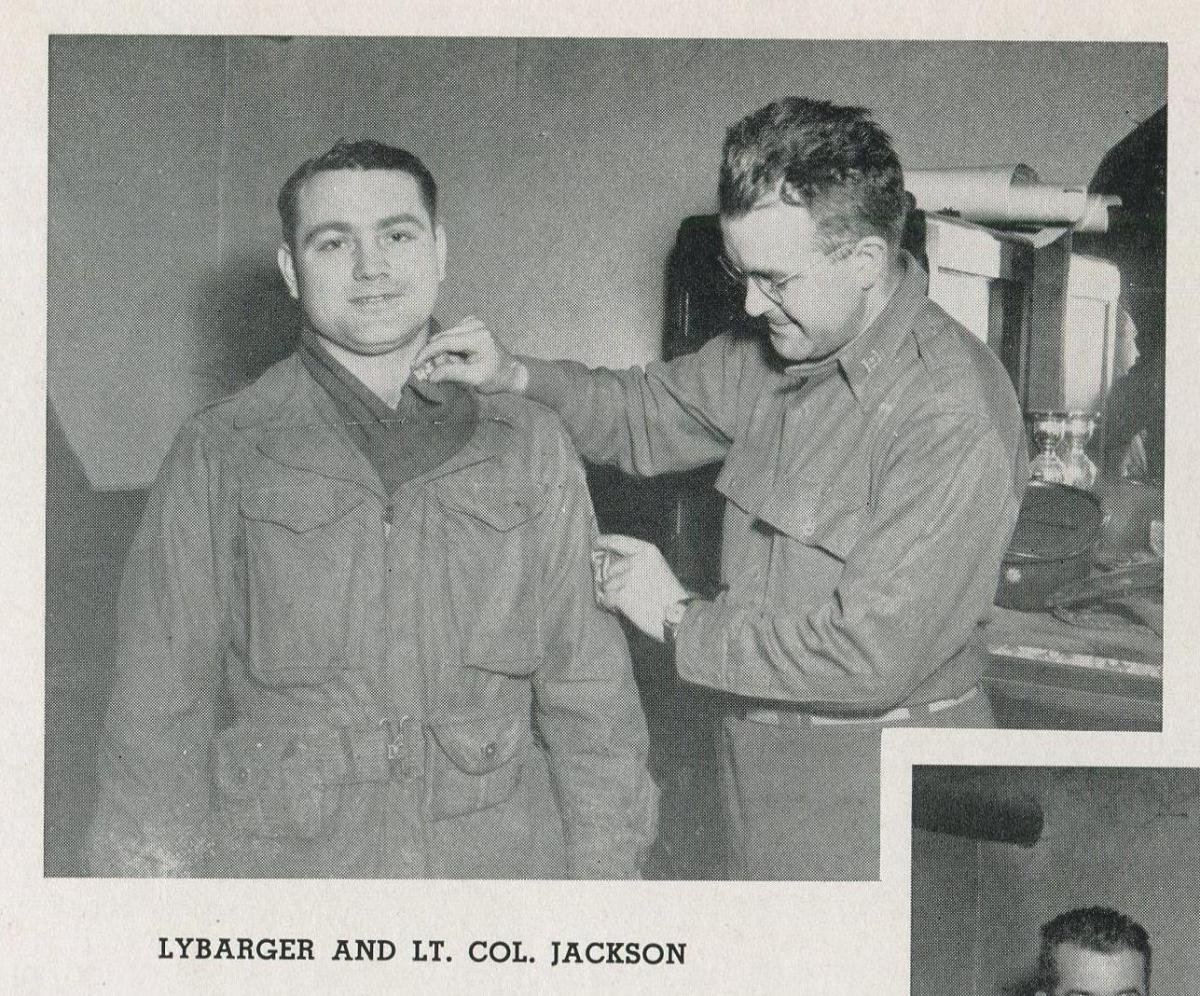


Ernest W. Lybarger, 2nd. Lt., Brooklyn, New York Commisioned from B Company First Sgt. on March, 1945 at Kleinmacher, Luxembourg
Accounts from Edwin N. Blasingim, First Sgt., Company B, 160 Engineer Combat Battalion as told to his son.
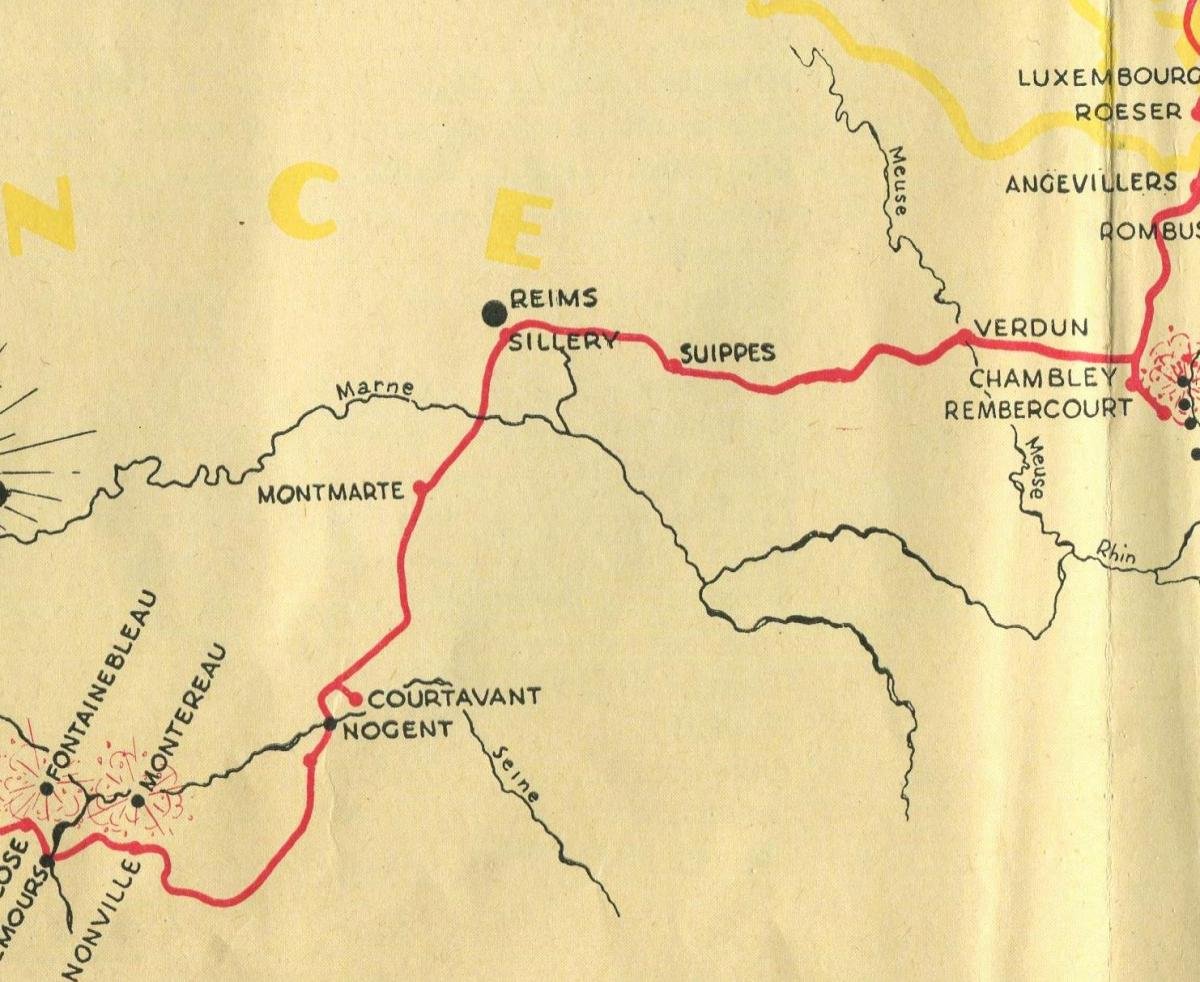
The 160th traveled quickly in their first convoys across France. When they got to where the Germans were, convoys were a lot different. The 160th was much more cautious. They traveled slower, convoyed shorter distances and often traveled at night. Dad remembers that late one evening after traveling several hours with black out lights the convoy pulled into a camping area for the night. As the trucks rolled in and started parking and posting guards they realized that some Germans were already in the place. There was much confusion and scrambling on both sides and the trucks and jeeps kept rolling in. It was tense for a while for those who were aware of the Germans. When things settled down the Germans were gone and no shots had been fired.
Dad was a back-up driver for a 6x6 and one night when he was behind the wheel the convoy went through a dark intersection in a small deserted French town. Usually there were guards posted to ensure that the convoy stayed on route, but this intersection did not have a guard posted. Dad had let a little too much distance get between him and the truck whose blackout lights he was following. So in the dark he remembers turning left. After a few tense moments he was able to pick out the glow of the light on the truck he had been following. He had no idea how many trucks were following him.
When the 160th pulled into a camp it was standard ops to post guards immediately. Usually there would be 3 or 4 trucks that would take up positions on the perimeter of the camping area, the men in each truck would spread out but stay close to their truck. Once, after a hard day and then a long night of convoying the 160th set up a camp and everybody was exhausted so they bedded down. When they woke the next morning they discovered that no guard had been posted. Guards went out immediately and everybody took cover and was armed and on alert until they were sure that the area was secure. Dad said that that never happened again.
Dad said that the 160th made some mistakes but fortunately they weren't costly ones. When the 160th was convoying into Verdun for the first time they got off route and bypassed the town. Most of the drivers did not know the route or destination, they just followed the vehicle in front of them. They learned later that the route they took that day was not the proposed one. Their leaders got directions on the far side of Verdun and came back bypassing the town on the other side and continued out of town about 10 miles where they set up camp. Verdun had just been bombed by the Germans who had been pushed out the day before. When the 160th came back into town there was a large German bomb that had hit in the middle of one of the main streets. It was buried and unexploded. Digging it out and disarming it was going to be a job for B company. Before they started, the job was assigned to another outfit. Dad remembers how relieved he felt.
You never knew how close the Germans were. So everyone stayed on their toes. Dad was not a big drinker but some of the engineers in the 160th were. In France that meant wine. The 160th was low on gasoline, like the rest of the 3rd Army so they were stuck where they were at for a while. Somewhere east of Verdun there was a wine bar with a big selection of wines, Dad said it was a very nice place.Some times the bar was filled with American G.I.s, drinking and socializing with their buddies from other outfits. But at other times the Germans owned the place. Somehow the Americans and the Germans managed to keep from encountering each other and there was never any conflict that Dad knew about. The bartender had some nervous afternoons though.
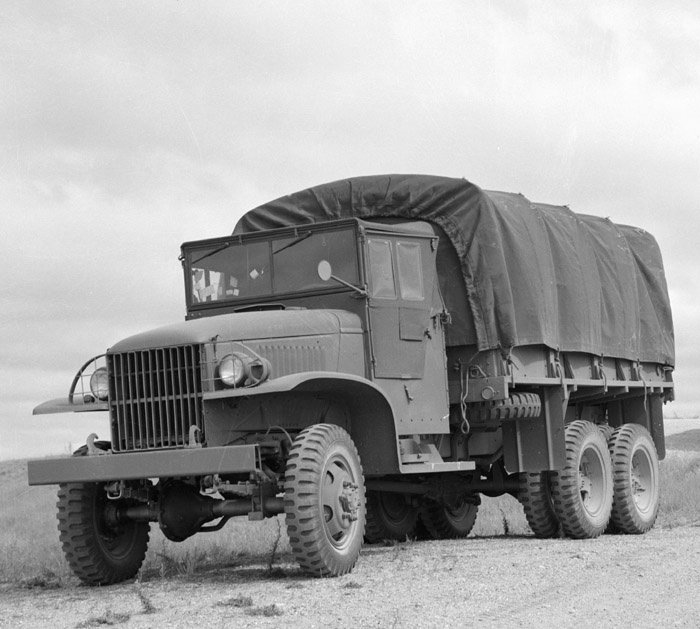
black out light on drivers side of 6x6
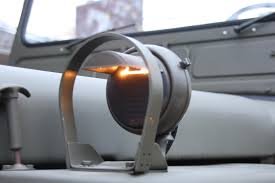
close-up of blackout light
Some spine-tingling moments, that's for sure. Had no problem picturing all this, as it created a movie in my head.
Love the part about the bar too and the fact that both sets of troops inhabited it, but God forbid, never at the same time.
Marion J Chard
Proud Daughter of Walter 'Monday' Poniedzialek
540th Combat Engineer - H&S Company
Account from Edwin N. Blasingim, First Sergeant, 160 Engineer Combat Battalion, as told to his son.
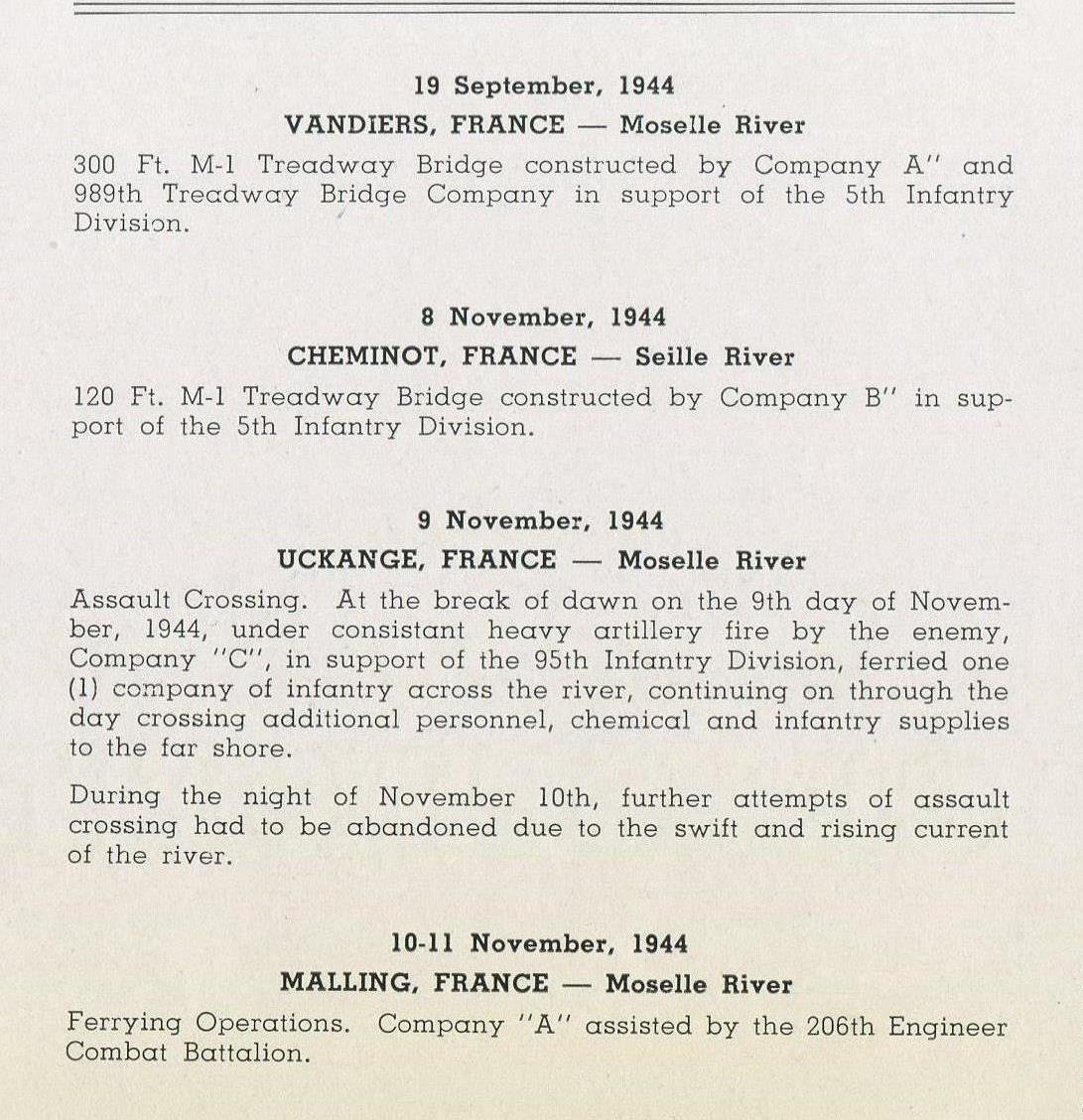
The 160 Engineer Combat Battalion spent most of the Fall of 1944 with the 5th Infantry Division and the rest of Patton's Third Army at the Moselle River, up and down the valley from Pont-A-Mousson to Trier.The fortified city of Metz was the big objective and the big obstacle to getting into Germany and across the Rhine.


Fourty three of the highest hills around Metz had fortresses built into them with a lot of rolling armor in position on the high ground around the fortresses.Dad remembers the 160th heading east from Verdun convoying towards Dornot, a small town just south of Metz on the west side of the Moselle. The convoy started that day and that night they were descending into the Moselle Valley. Dad was riding in a canvas topped Jeep and they had been hearing the artillery barrages for miles and as they came out of the hills towards the valley they could see the flashes in the haze and low clouds. The shelling was intense and there didn't seem to be any sign of it letting up. The convoy got as far as the town of Dornot and the convoy circled back up the hill and away from the artillery and mortar fire. A few miles up from the river and away from the shelling they stopped to get their bearings and their orders straight. The officer in charge of that convoy was severely reprimanded. The men hadn't had much to eat so they had some rations for a mid-morning meal and the order went out that they were heading back down. Dad remembers that he dreaded that trip more than any other in the war. It was one thing to come under attack when you were positioned someplace but to move into a an intense attack was extremely difficult. These accounts are from my notes from talking with Dad for several years but today he said, " Remembering that trip is like remembering a really bad dream".
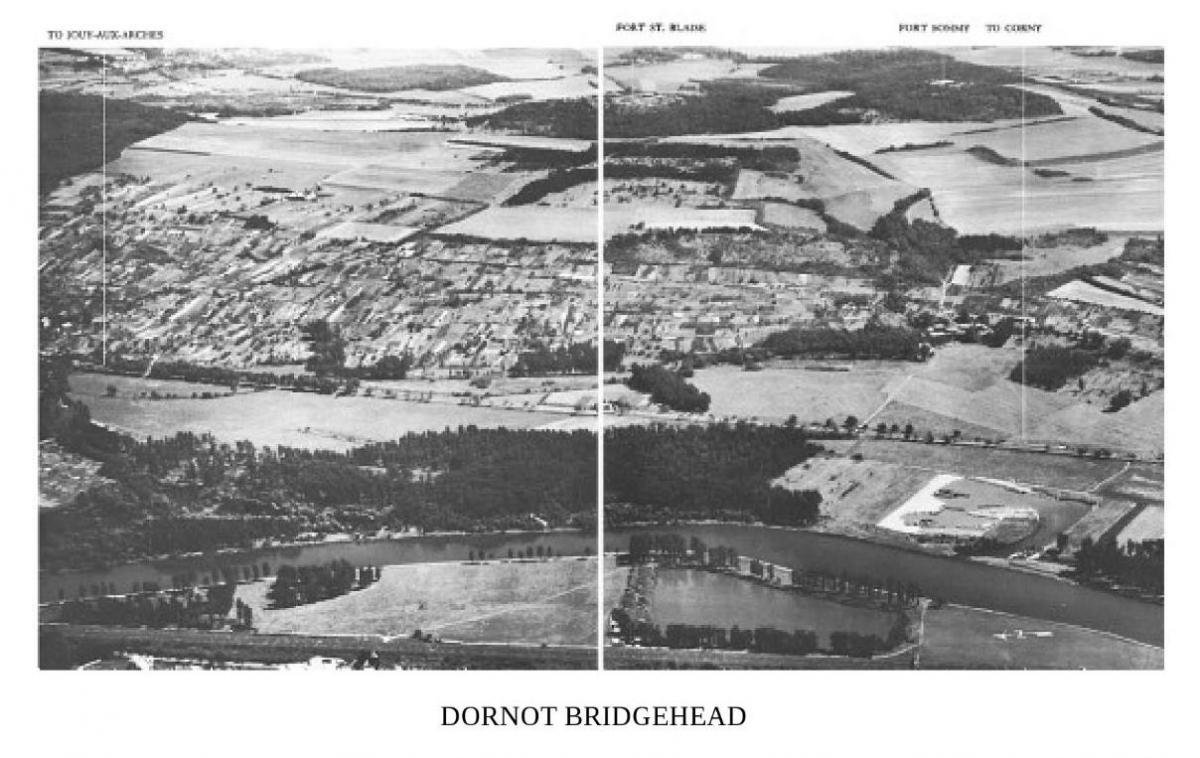
Picture of the Dornot bridgehead looking east from above Dornot.
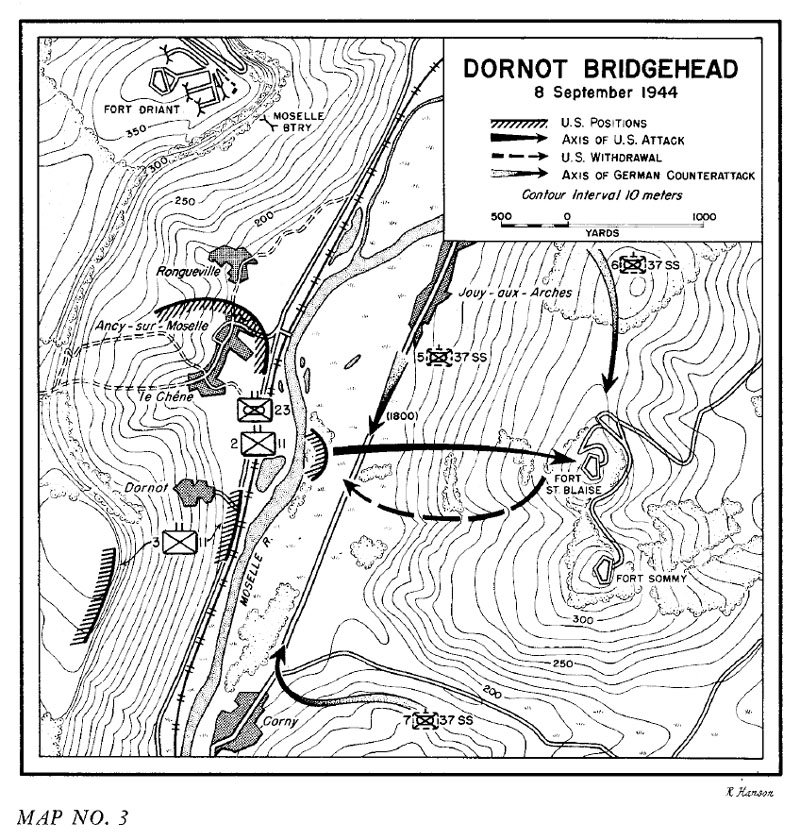
Map of Darnot bridgehead.
It had just rained when the 160th arrived at the Dornot bridgehead and they spent a lot of time in muddy foxholes. One afternoon while pinned in their foxholes they watched P-47s come in and bomb the nearby fortresses with huge bombs. The P-47s left and came back about 2 hours later with another load of bombs and hit them again. The bombing was accurate but they later heard that little damage was done.
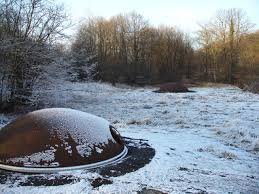
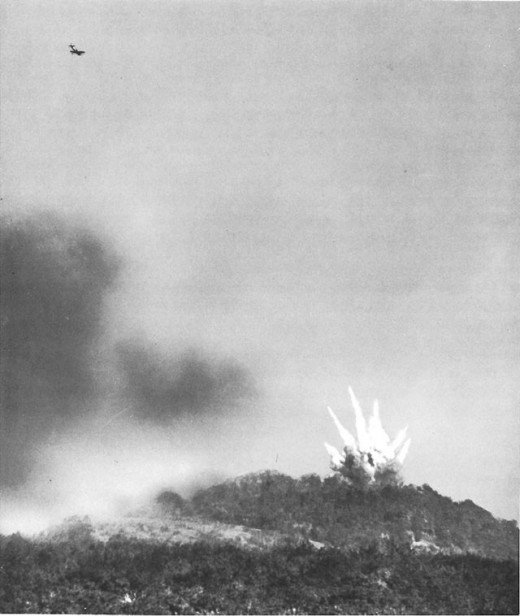
The 160th B Company took men from the 5th across in the dark early hours of the morning. It was an assault crossing into the teeth of the Germans. The Dornot bridgehead was situated in artillery range of 5 of the Metz fortresses. Fort Driant was on a hilltop about 2 miles away. Fort St. Blaise and Fort Sommy were line of sight on a ridge straight across the valley. There were several assault crossings but the bridgehead had to be given up and Dad remembers bringing men back in the middle of the night. We had a lot of casualties and fatalities at Dornot. The Dornot bridgehead was a dangerous place to even be. The artillery fire was so accurate and intense that the bridgehead had to be abandoned and everybody moved up river, south about 2 1/2 miles to Arnaville. They moved out in the middle of the night hurriedly so the Germans would not have time to stage an attack.
The rain kept coming and the mud made everything worse. When an artillery shell hit the mud it sprayed mud in every direction for hundreds of feet. At Arnaville The 160th B Company made an assault crossing with the 5th. At this point all movement was made at night so this one was made in the early morning hours. When the sun came up the infantry discovered that they were on an island, not the far shore. They laid low and that night the engineers came and carried them back.
The mud that fall was horrible. The dirt was a fine clay that turned to grease when it got wet. It was already wet when the 160th got to the Moselle and Dad said that the rain wasn't heavy but it would rain continually for days at a time.The Moselle was over its banks and flowing fast, several times it was above flood stage. The muddy roads would stick vehicles, even tanks, and the men were often called on to go out into calf deep mud and push a vehicle to get it moving. The artillery fire was so consistent that they stayed in foxholes for a day at a time. You would have to keep the bottom of your foxhole cleaned out or you would be standing in water. The engineers were clothed well but their ears froze. Ear muffs were issued but you had to keep your helmet on so the engineers improvised all kinds of ear coverings. It wasn't cold enough for frostbite but it was a bitter damp miserable cold.

Picture from around Pont-A-Mousson showing how wet it could get in the Moselle Valley ( flood plain).
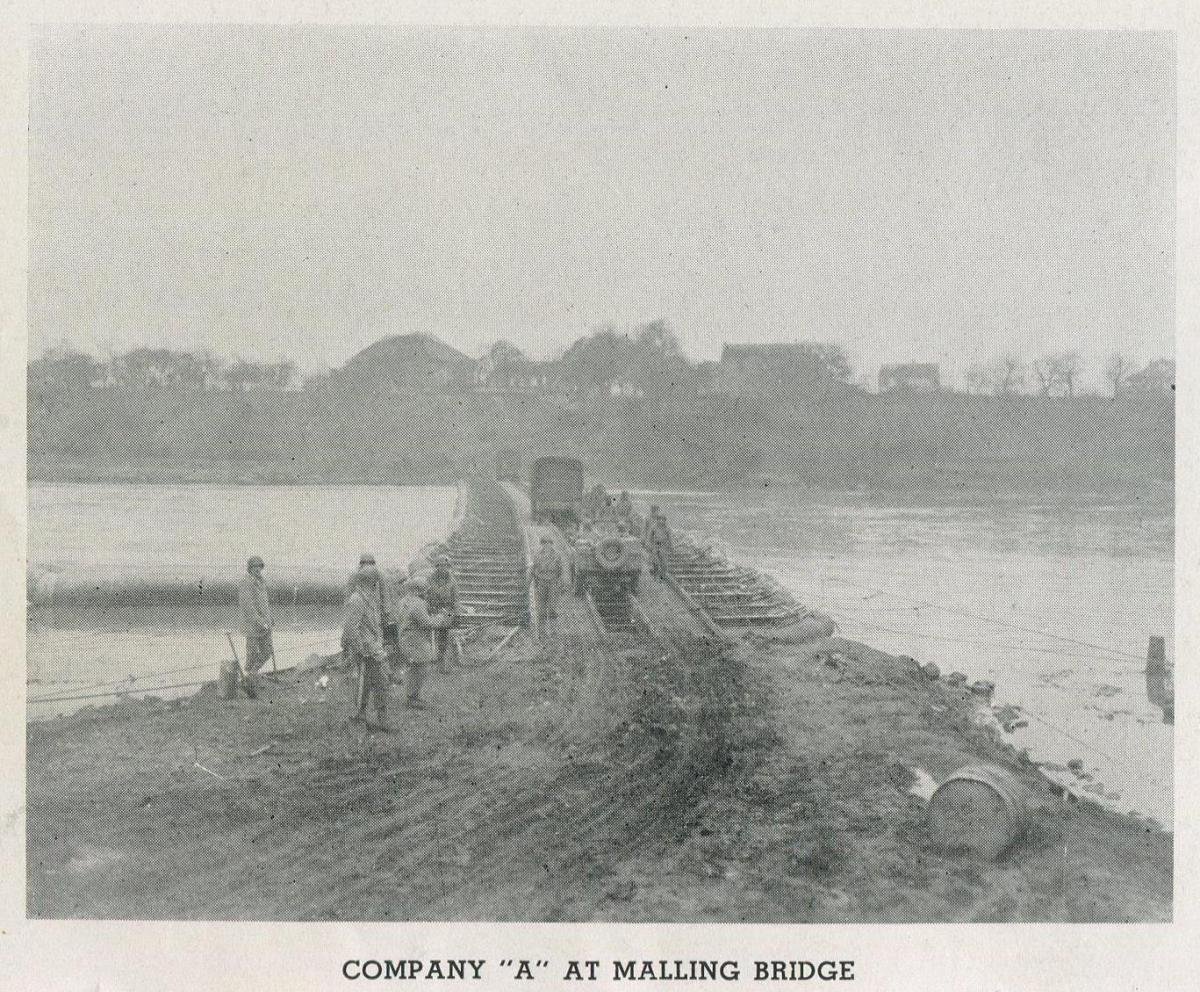
The 160th was building a bridge at Arnaville. At night the Germans would put a forward observer very close to the bridge site. When enemy fire slowed down the engineers would go to work on the bridge, as soon as they started working, the artillery, mortar and small arms fire would start. So they would retreat to their foxholes and the fire would stop. This made for slow progress but the bridges did get completed. As far as Dad knew, on the Moselle River was the first time the 160th worked with a smoke screen. It was used to hide large amounts of men and equipment in the open. It did not have a pleasant smell but it was better than having an artillery shell in your lap.
These are a few pictures from the 160th Battalion Book. Most of what happened on the Moselle was classified until the 1970s.




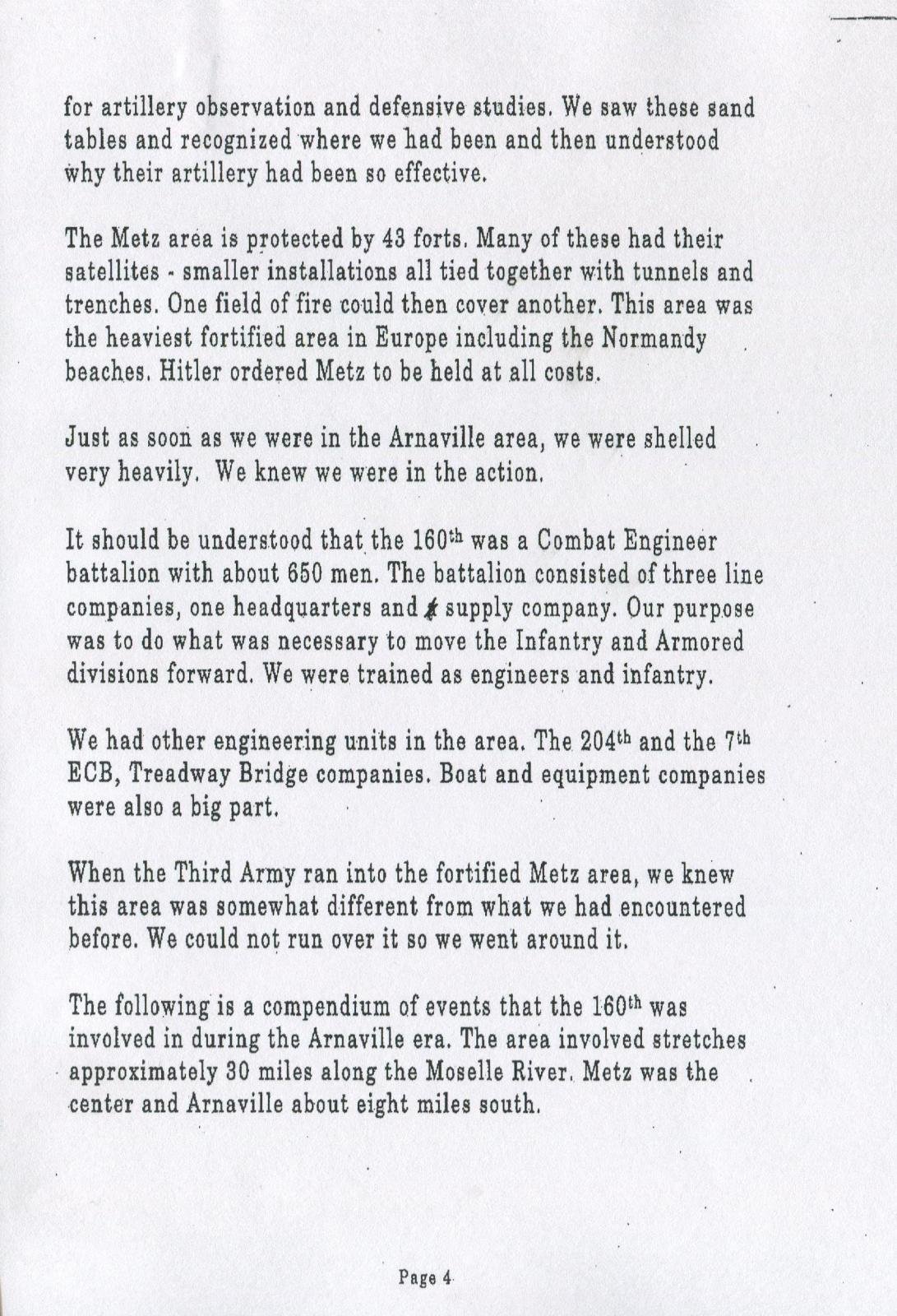
Earl R. Stonefield, Sgt., B Company, 160th Engineer Combat Battalion gives an account of the 160th on the Moselle River, up and down from Metz. This was sent to me by our friends in the U.S.Army Engineers History Office.
Glen Blasingim




Three cheers for sharing these accounts with us and many thanks to your dad and the Army Corps of Engineer's History office. I don't know what I would have done without them.
Man, can you say, mud, mud and mud?
Marion J Chard
Proud Daughter of Walter 'Monday' Poniedzialek
540th Combat Engineer - H&S Company
Marion, I have been gone for a while. This is late but better that than never. You are right, the Army Corps of Engineers History Office has been most helpful to me too. Everybody I have come into contact with in the U.S Army in any official capacity has been most friendly and helpful. I appreciate that they take the time to answer me and I thank them. Thanks to you too.
When I was asking my Dad about the mud, several times in the conversation he brought up the straw bales that they used in that school house outside of Thionville ( see our post November 2015). After a while in the mud, anything dry looked good to those guys.
Glen Blasingim, son of Edwin N. Blasingim
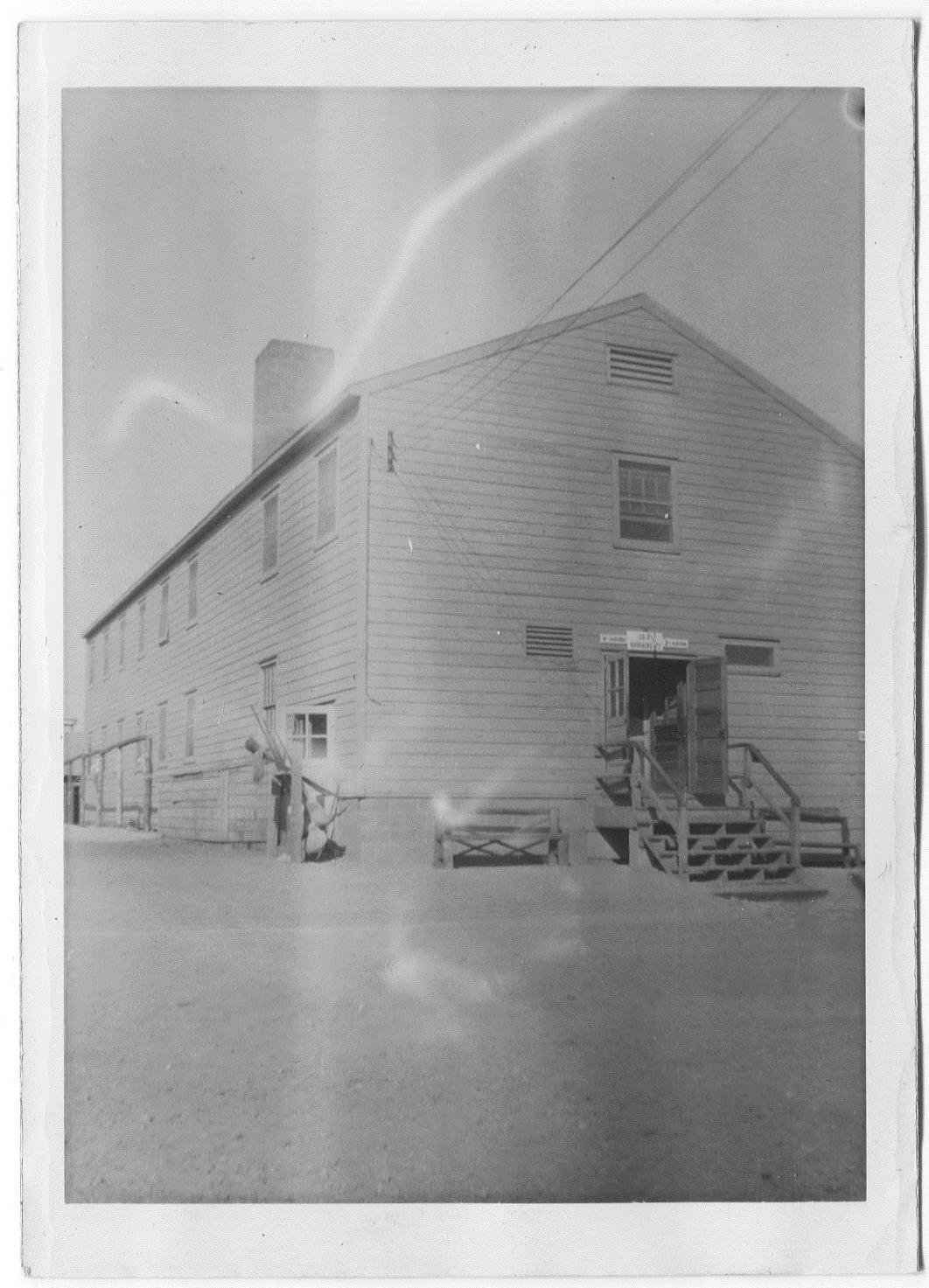
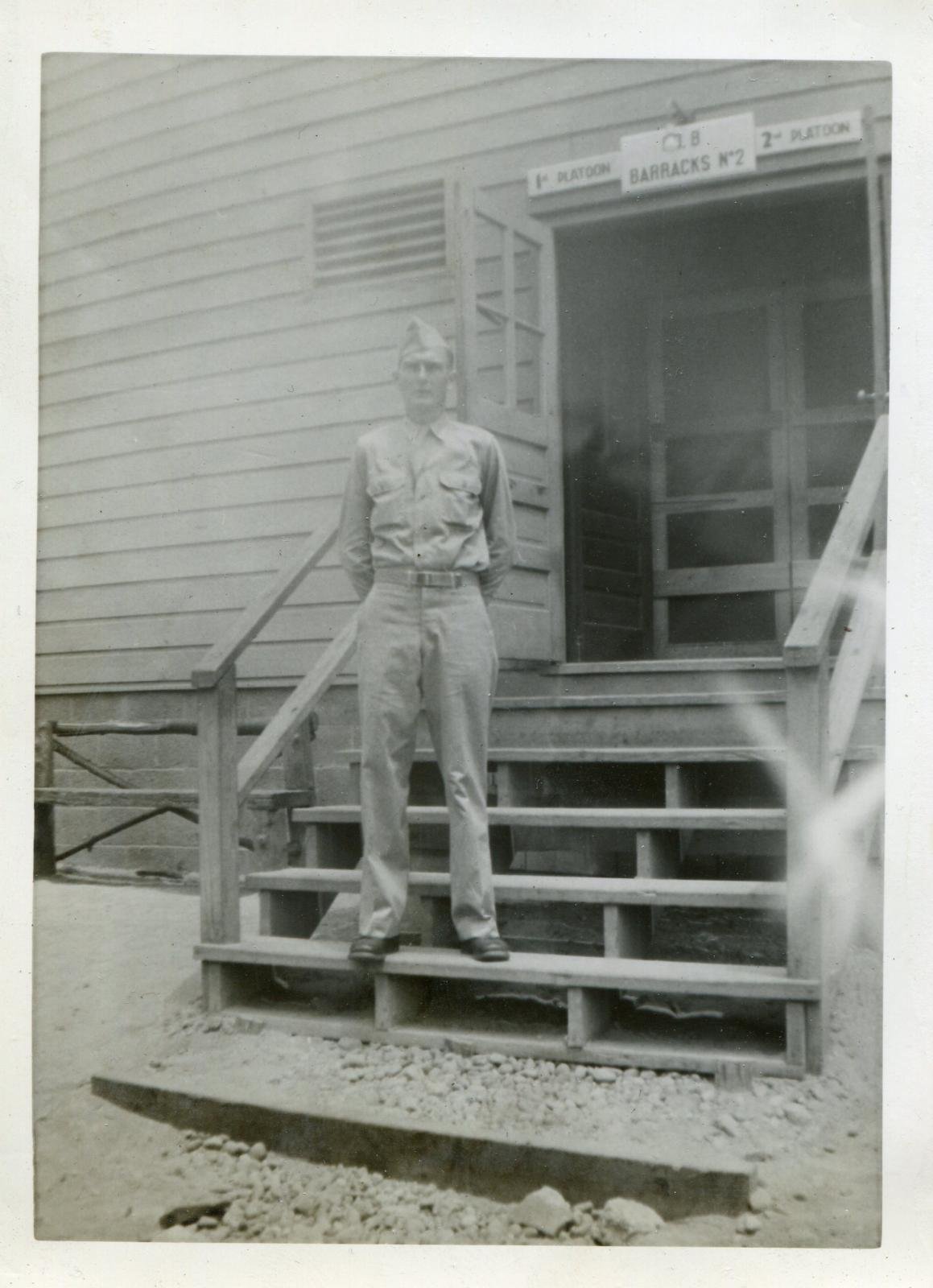
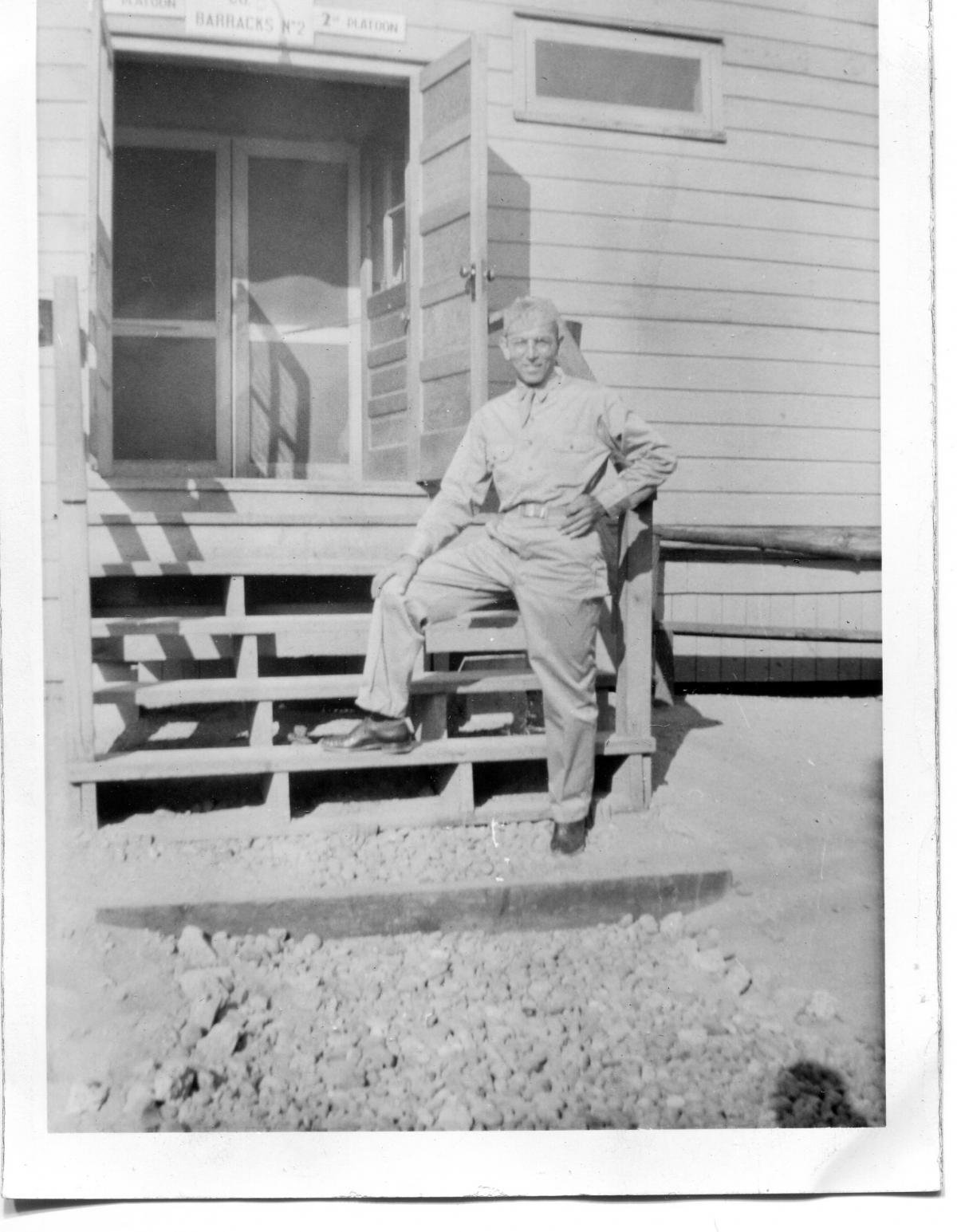
The 160 Engineer Combat Battalion was stationed at Fort Meade, Maryland in the Spring of 1943. They were formed there on April 27,1943 with 638 men. Dad doesn't remember much about their official duties at Fort Meade but he does remember a weekend pass that he and some buddies got and they took a bus to Washington D.C. to see the sights of the capitol. While they were there they got a craving for some southern fried chicken. They found some fried chicken but as Dad remembers it wasn't " southern fried". Dad's memory is a little fuzzy on this but he and his buddies might have gotten a little out of hand that weekend and had to answer for their behavior when they got back to the fort. These are pictures of some of the men from the 160th that were taken that Spring.


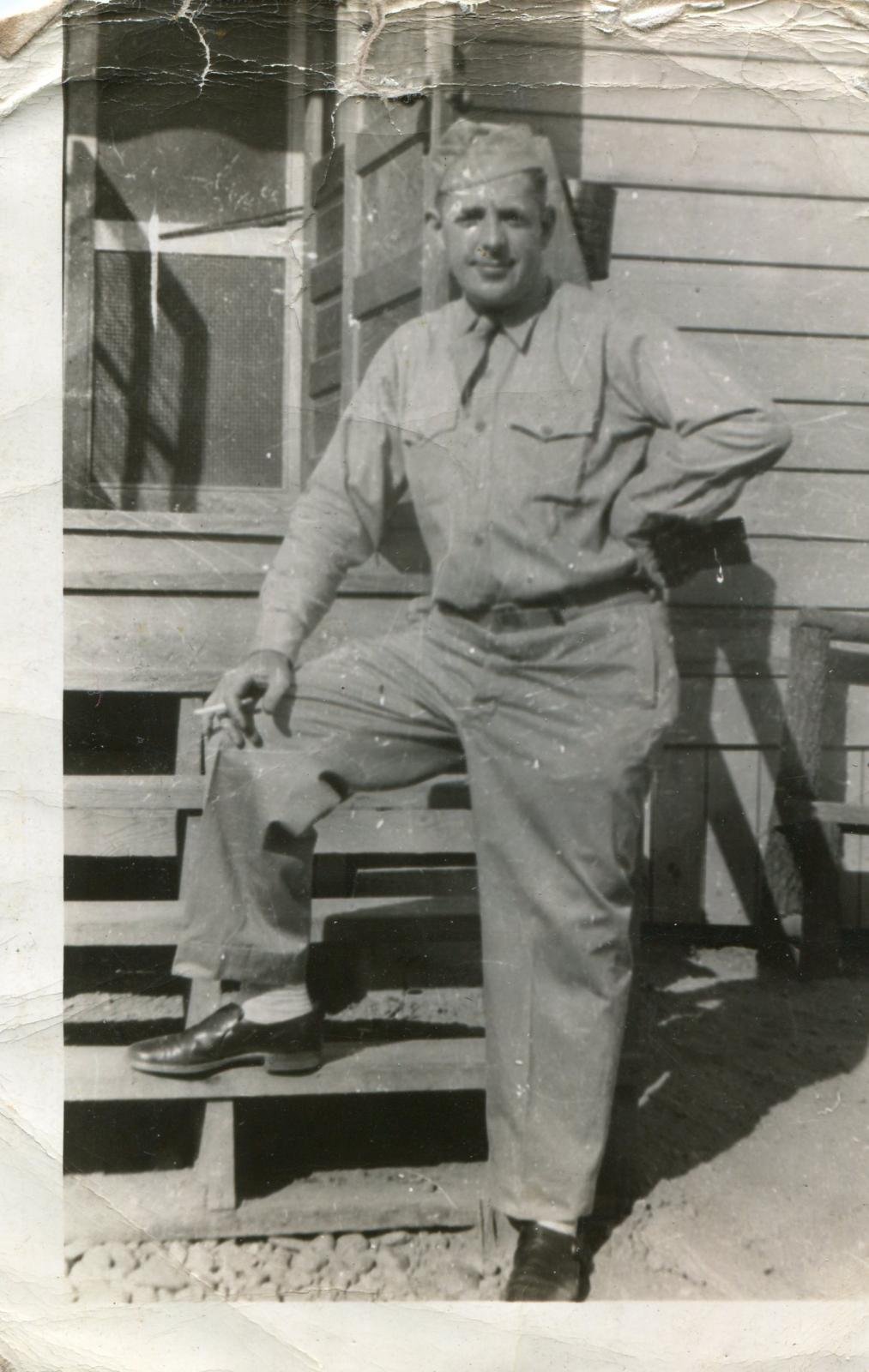
Oscar G. Anderson

Company Billeting
Frank W. Prinz
Charles V. Zimmerman

Edwin N. Blasingim
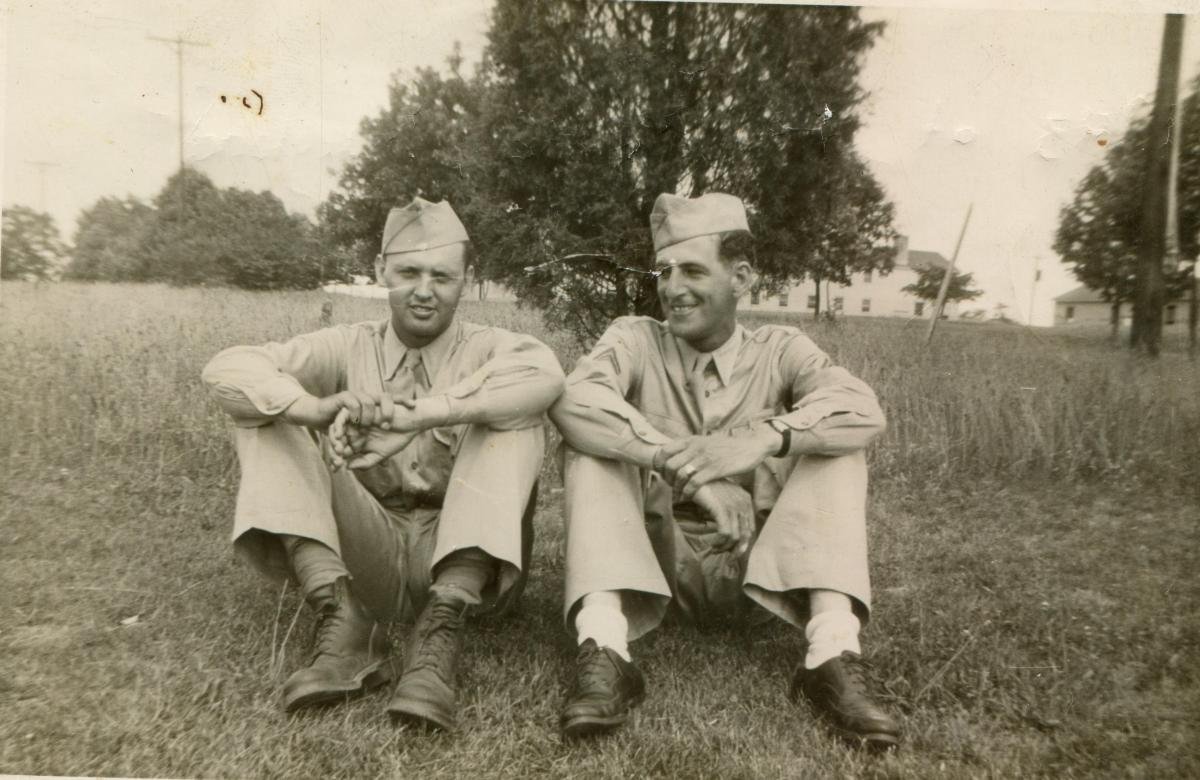
Kallam and Blasingim
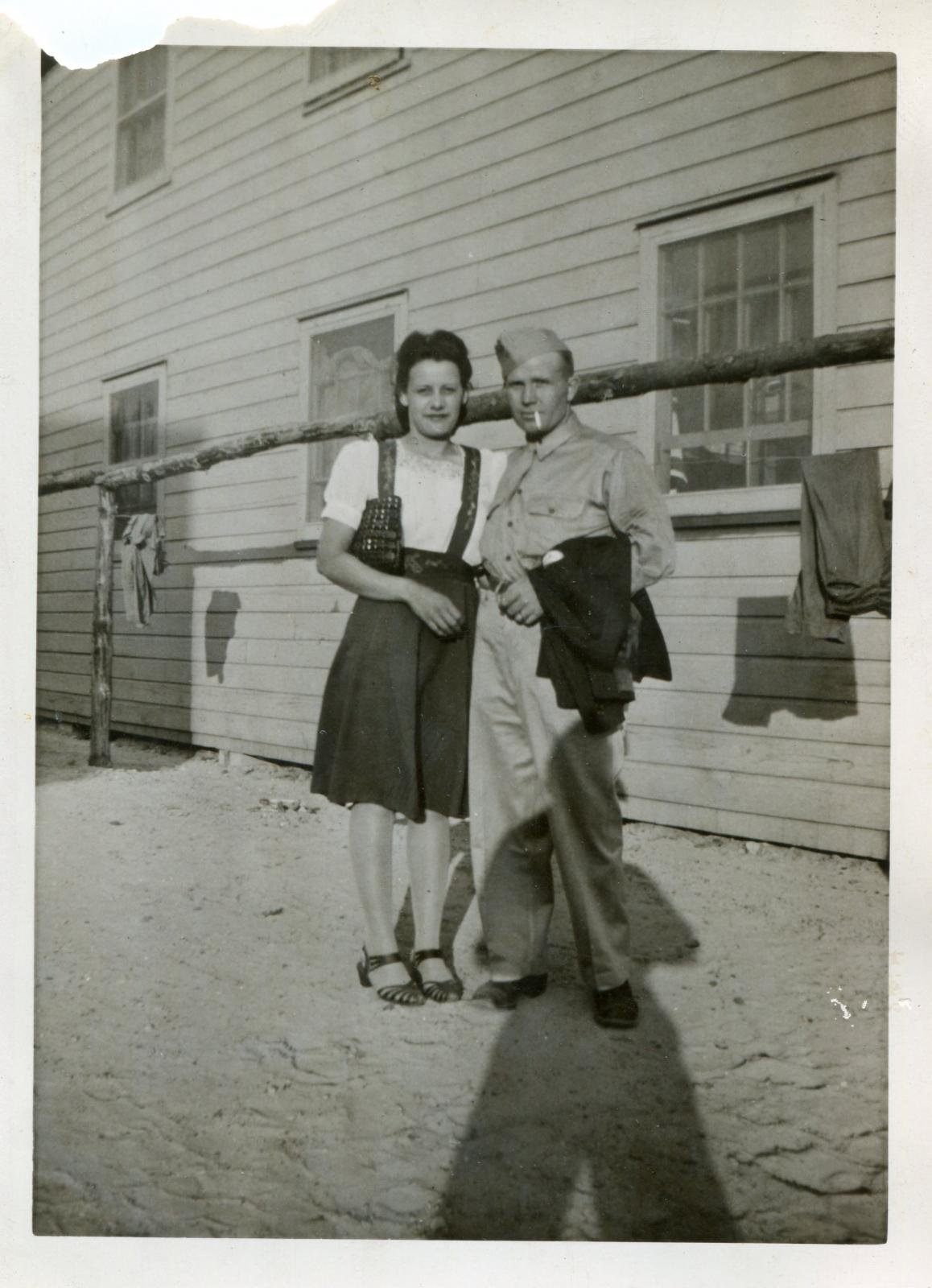


Red Miller and Wife, Wife, Red Miller and Cpl Meyers

Anderson and Meyers
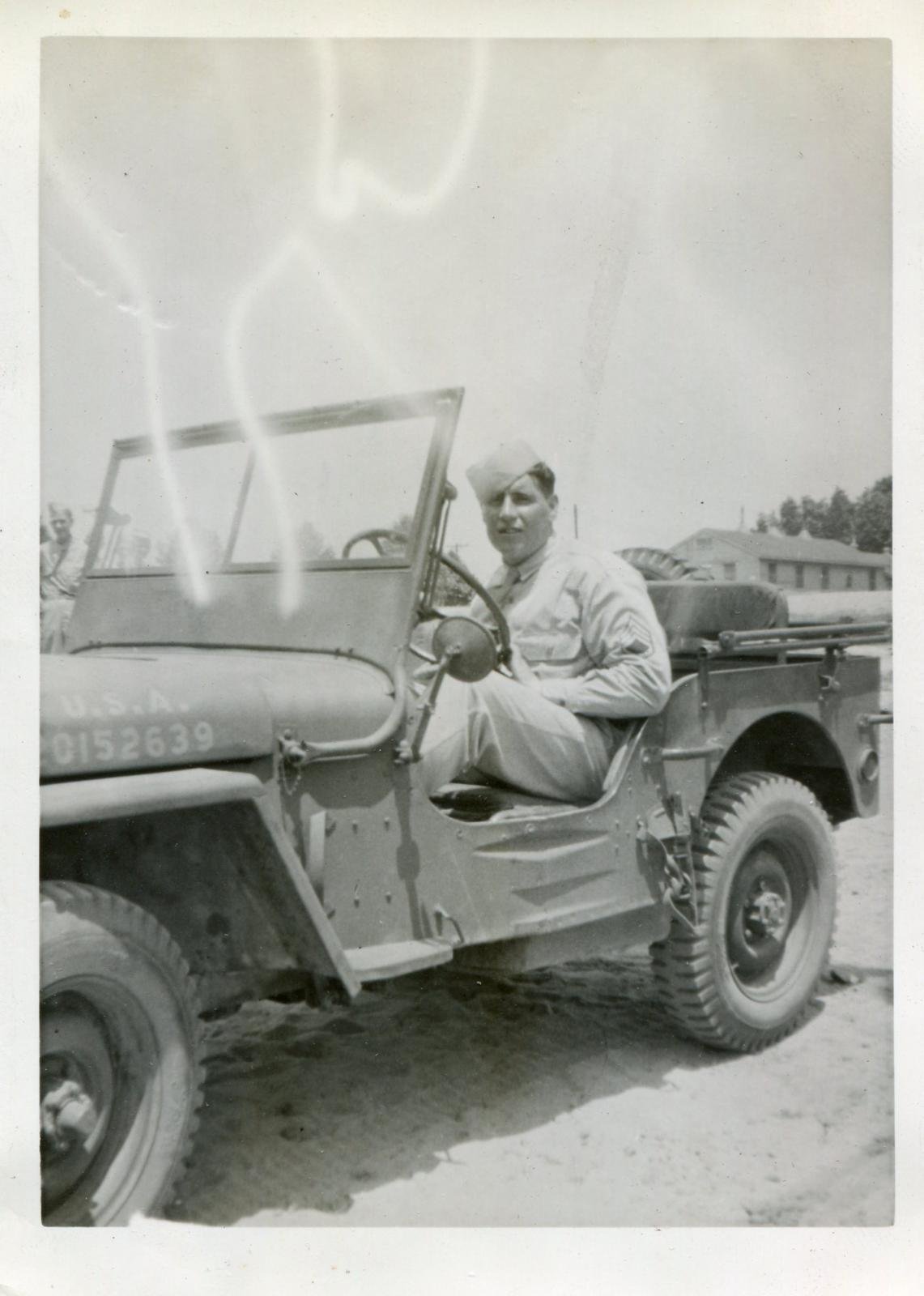

Sgt. Hu
Glen Blasingim, son of Edwin N. Blasingim
The 160th at Fort Rucker, Alabama
In the spring of 1944, the 160 Engineer Combat Battalion convoyed from Watertown, Tennessee to Fort Rucker in southern Alabama to receive overseas training.
Dad remembers the p.o.w. camp across from the 160th barracks and how well the German prisoners were treated. James N. Corley, Company B, 160th, told his son Keith that he remembered that they would march in formation past the p.o.w. compound and the prisoners would be out playing ball.That memory stayed with James and my Dad.
Sometime during their stay at Fort Rucker the 160th made a long convoy to Tennessee and back, about 600 miles round trip. Dad remembered going to the canteen and buying a bag of Hershey bars with almonds, his favorite, to take along in the 6x6 where Dad was a back-up driver. Dad liked to snack on the chocolate bars while he was driving. They got a lot of support from the civilians, there would be waving and cheering as they convoyed through the countryside. Once when they stopped to spend the night in the vicinity of Birmingham, swarms of people brought them home cooked food.
One time the men had to strip from the waist up and get in line where they received a barrage of shots. There was a lot happening at Fort Rucker but these things stayed in Dad's memory for all those years.
Early that summer the 160th left Fort Rucker on a train to Camp Miles Standish just south of Boston where they boarded a ship to go overseas.
These photographs of men of the 160th were all taken at Fort Rucker that spring/summer during their overseas training. Most are identified, if anyone can add anything about anyone in these photographs, know anything about the 160th at Fort Rucker or have photographs you would share, please contact Marion Chard at this (her) website.
Names of men identified in these photographs:
Dawgiello, Edward J., Pfc Pittsburgh, Pennsylvania
Howard, Neoda S., Tec 5 Terre Haute, Indiana
Rydelski, Joseph S., Pfc Erie, Pennsylvania
Stackawitz, Harry O., Pfc Pittsburgh, Penn
Tripp, Lowell H., Tec 5 Ovieda, Florida
Turner, Roby D., Tec 5 Royboro, North Carolina

Dawgiello

Dawgiello
Dawgiello

Dawgiello

Stackawitz and Dawgiello

Dawgiello and Joseph Rydelski
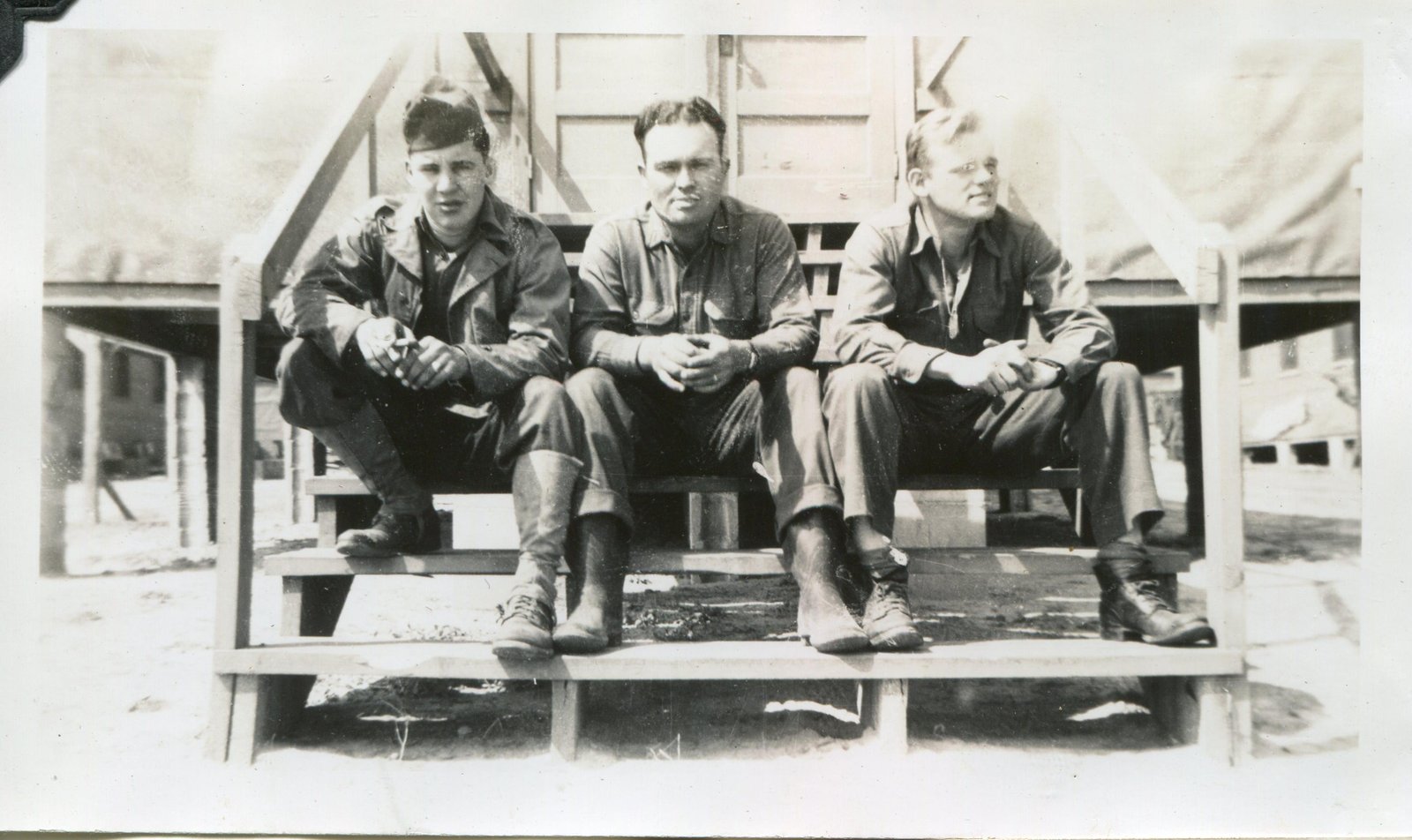
Dawgiello, Turner and Joseph Rydelski

Dawgiello. Turner and Joseph Rydelski

Tripp-Turner
Lowell Tripp's family was close friends with Dad's family in Florida. He later became a tank driver for the 160th and Dad got to talk to him often.

Turner, Howard and Tripp
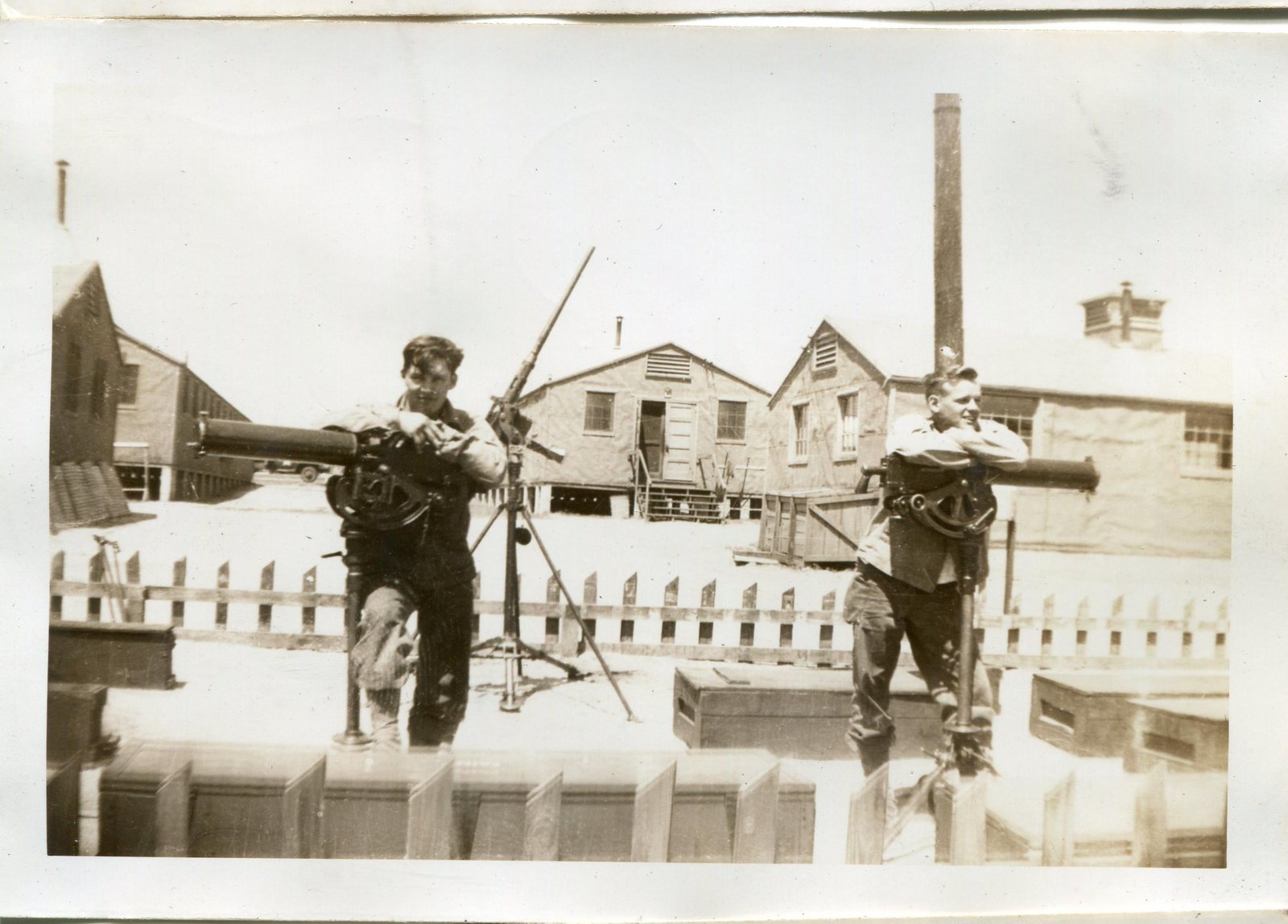
Dawgiello and Joseph Rydelski
.jpg.1523ef0a3c9403e345cea48203176f7b.jpg)
Dawgiello and Joseph Rydelski

Joseph Rydelski

Joseph Rydelski and Dawgiello

Joseph Rydelski-unknown-Dawgiello
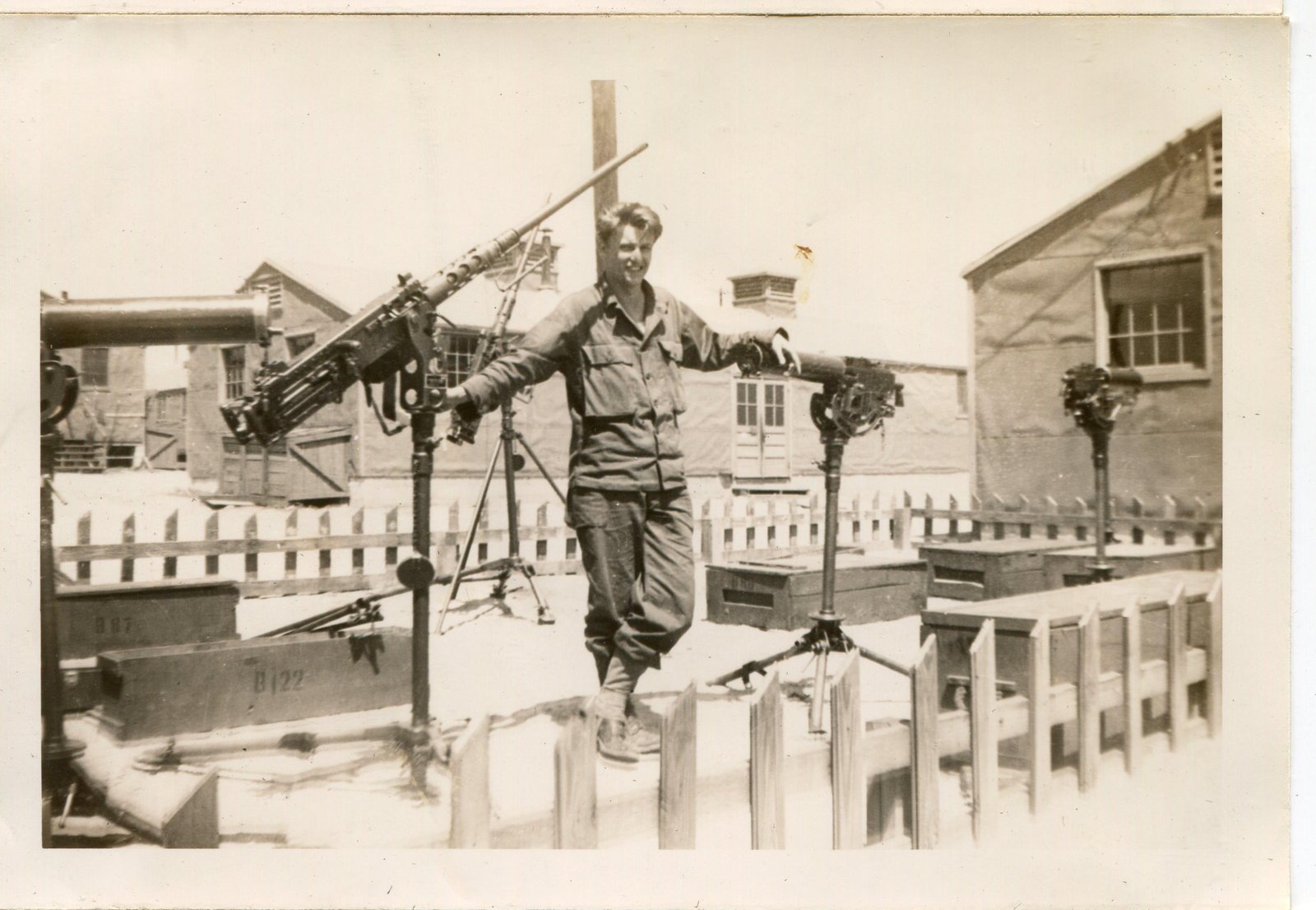
Unknown
.jpg.399c4c66e7efe42e3e9ae2ba1423c18b.jpg)
Unknown

PT at Rucker.
Glen Blasingim
Cool! Love seeing more and more of these!
Marion J Chard
Proud Daughter of Walter 'Monday' Poniedzialek
540th Combat Engineer - H&S Company
160 Engineer Combat Battalion, Company A
These photographs of Company A were copied from the 160 Engineer Combat Battalion book. Detail is not great but is possibly good enough to identify a familiar face.


.jpg.268f16dc4135ced5c0a49014d53f15f6.jpg)
.jpg.2fde3a982e097ebdca99e17ed5364d8e.jpg)
.jpg.e0603f10f4694b6c2c0f64714ad8c082.jpg)


Glen Blasingim
160 Engineer Combat Battalion, Company A
Ralph L. Peters, Pfc. from Sanford, Florida served in Company A from Fort Meade to his discharge. His proud son Wayne has honored his Dad with a brief history of his Dad's service on his website, www.petersheritage.com.
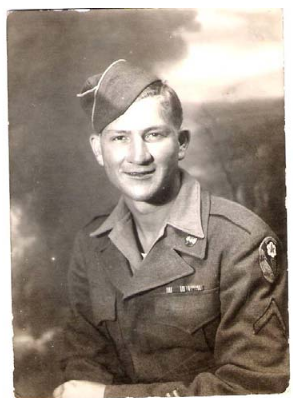
Wayne lost his Dad at an early age and is very interested in finding out more about his Dad in the 160th. He would like to hear from anyone who had a loved one who served in the 160th, especially Company A.
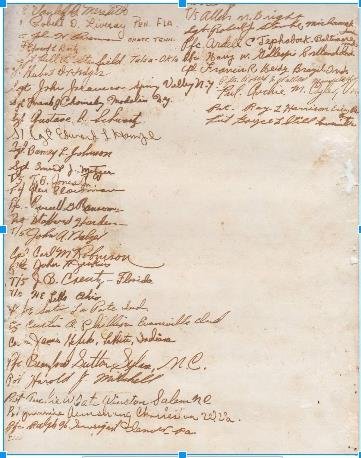
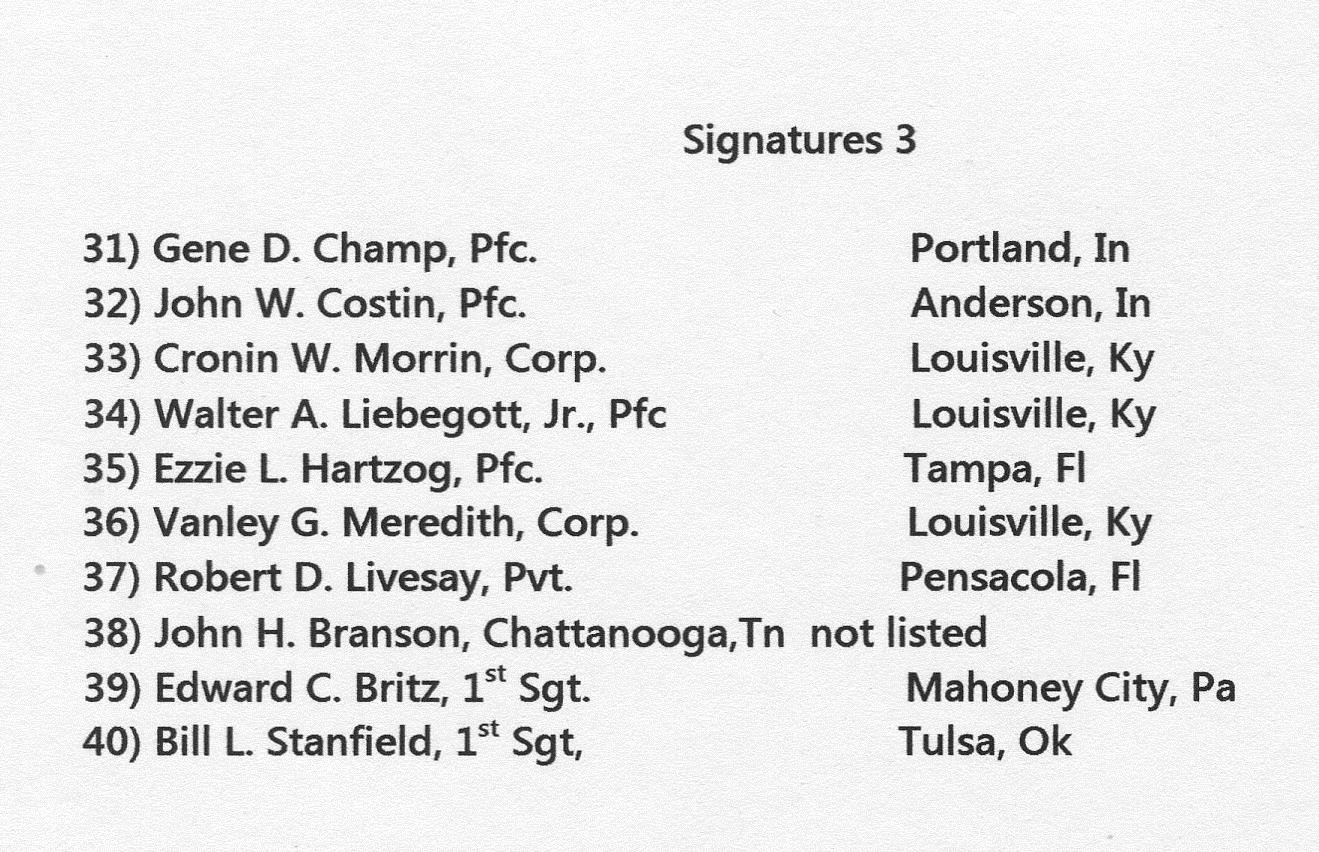
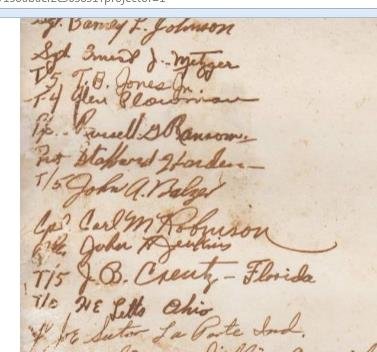
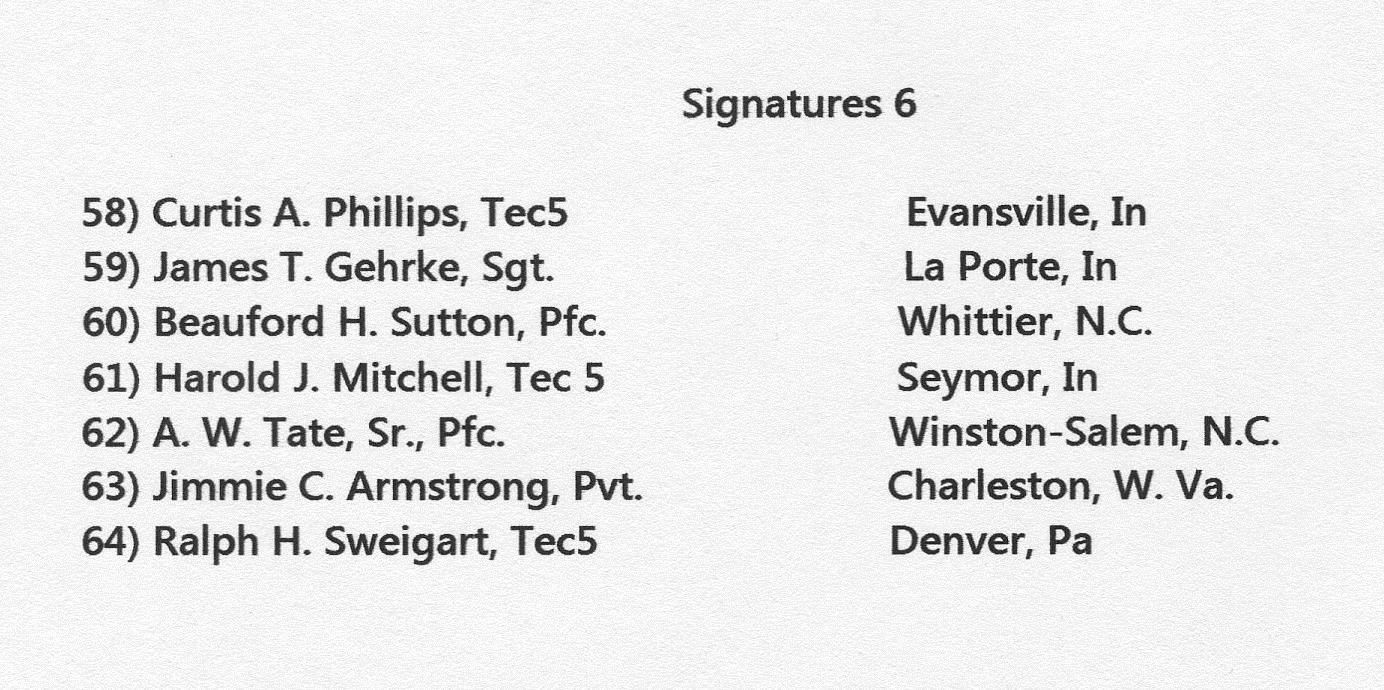
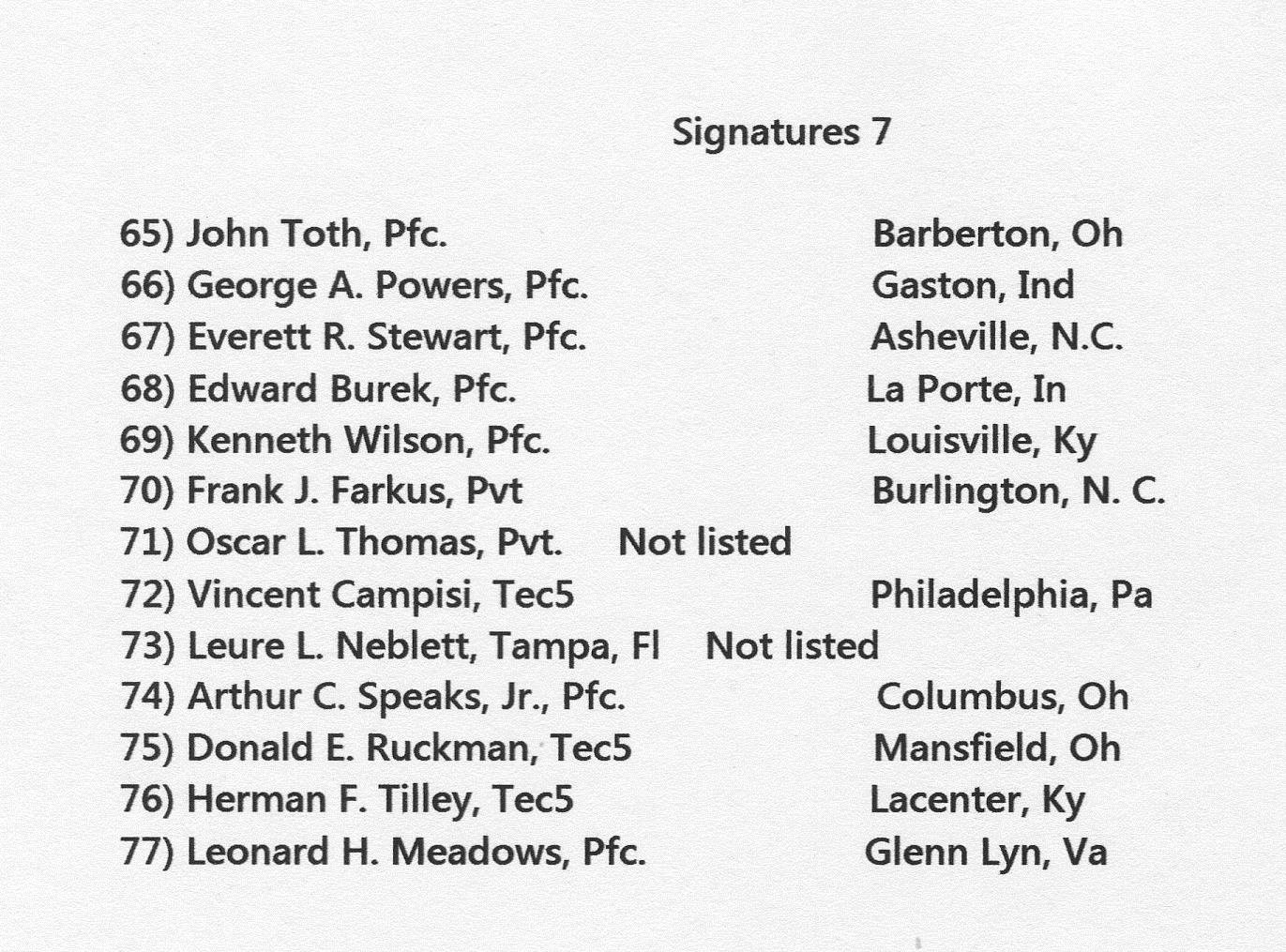
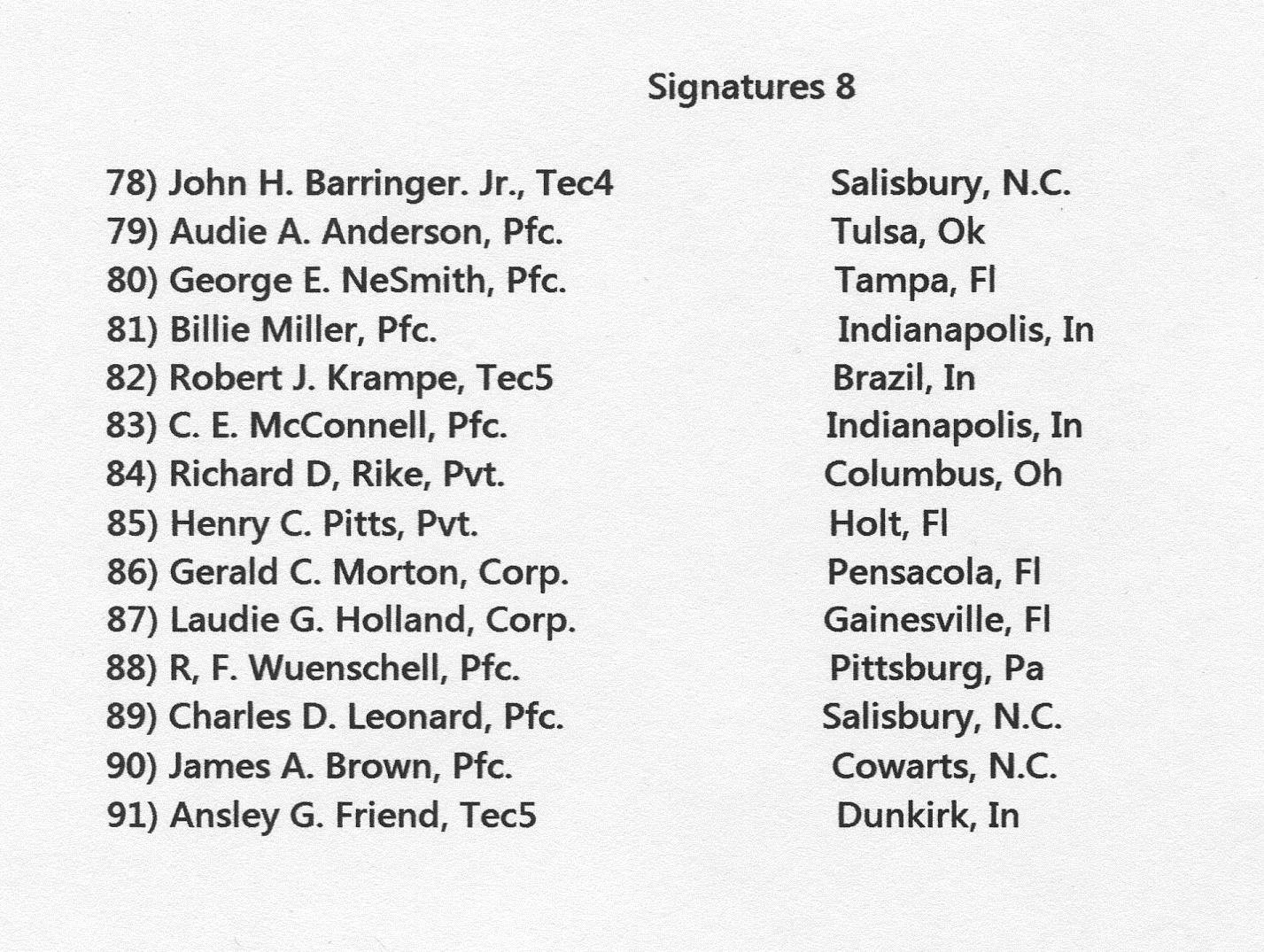
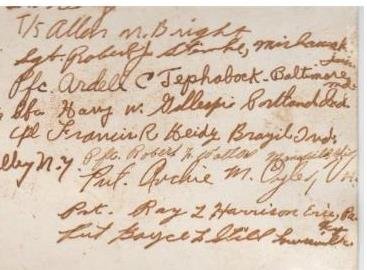
Wayne shared this group photograph of Company A. Wayne said that he thought that the photograph was taken about the time the 160th was at Fort Meade, Maryland ( The 160th was formed there April 27, 1943). Private first class Peters had many of his buddies in the photograph autograph the back. Some of the men signed with their rank and several had more than one promotion to the ranks they were discharged with. That would substantiate that this picture was taken early in the 160th's history.
One of the signatures is by Carl L. Bowers, Tec5 from Brazil, Indiana. Carl is one of the three men from Company A who gave their lives while serving with the 160th.

The photograph has some worn tattered edges that look like it was rolled up and probably carried in Pfc, Peter's pack. No telling how many miles it traveled in the back of a 6x6 or how many miles it traveled on his back. It probably had some foxhole time. If there is someone you remember that served in the 160th, Company A, his picture is probably here.

Signatures of 105 of the men in the Company A photograph.
At present, Ralph L. Peters,Pfc is the only man in the photograph that we can identify. He is, third row from top, ninth from left end, circled.
Enlarged signatures identified when possible.









Wayne Peters
Glen Blasingim
It's so nice to see the images and the names. This will be so nice for the kids and grandkids of the veterans. A real treasure for all.
Marion J Chard
Proud Daughter of Walter 'Monday' Poniedzialek
540th Combat Engineer - H&S Company
